


One Shot Soccer: Swipe & Score
4.619.00 Reviews
App Specs
- Version
- 1.7
- Updated On
- License
- Free
- Downloads
- 1,000,000+
- Developer
- World Sports Arena
- Categories
- Sports
- Platform
- Android
Screenshots
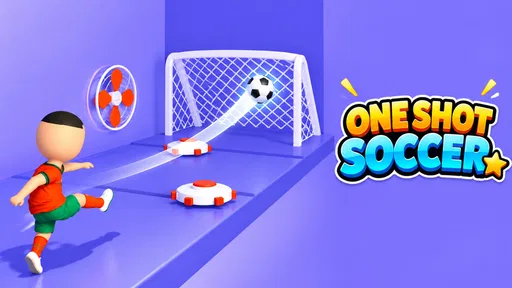
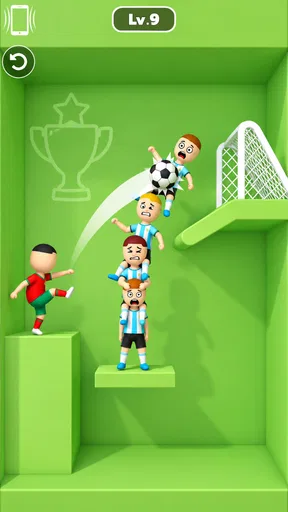
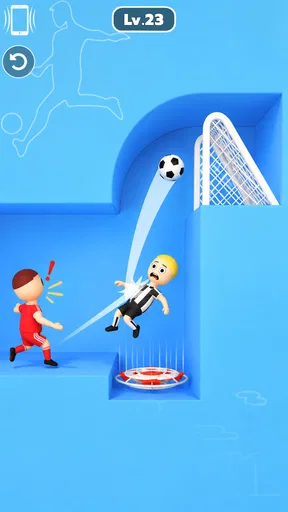
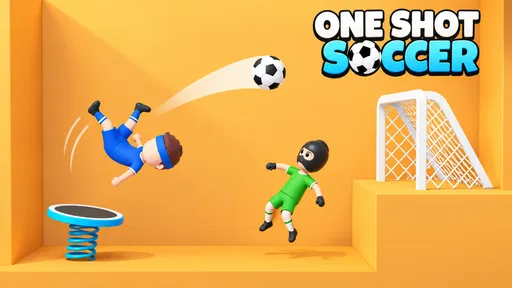
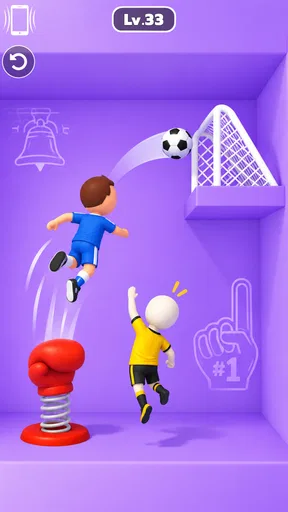
 Analysis by AppCompare
I like sports games that make their point quickly, and One Shot Soccer is built around a simple challenge: make each attempt count. Rather than asking me to manage a full match, it focuses attention on the shot itself. That gives it an easy-to-understand appeal for a quick break, though it also means the experience is best judged as a focused soccer game, not a substitute for a deeper football simulation.
One attempt is the whole attraction
The central idea is refreshingly direct: try to score with a shot. That narrow focus changes how I approach the game. In a conventional soccer title, I may spend much of a session passing, defending, and moving players into position. Here, the appeal is the moment of aiming and committing to an attempt. The question is not how to build a long possession, but whether I can turn a single opportunity into a goal.
That makes One Shot Soccer a sports game for people who enjoy a compact test of control and judgment. Its store summary asks whether you can score every shot, and that challenge is more compelling than a broad promise of endless football features. Each attempt invites a small decision: take the shot now, or make a more considered adjustment? I found that restraint is part of the fun. When a game keeps the goal in sight, even a short session can feel purposeful.
The swipe-and-score framing also makes the concept approachable. A newcomer does not need to learn a roster, a set of tactical menus, or the rhythms of a full match before understanding the basic goal. That simplicity is a real advantage when I want something I can pick up without planning a long play session. It is also a limitation: players who want team play, match management, or a wide range of soccer activities may find the central loop too narrow.
Why the focused shot matters
When a game reduces soccer to the shot, small choices become the main event. The satisfaction comes from paying attention to where I am aiming and whether my gesture is deliberate, rather than relying on a long sequence of unrelated actions. This design can make a missed attempt feel useful: it gives me a reason to adjust my next swipe instead of treating the session as a failed match.
That focus is a good fit for short, repeatable play. I can imagine opening it while waiting for a coffee or taking a break between tasks, playing long enough to test my touch, and then putting it away. It does not ask me to commit to a full sporting event. If I have only a few spare minutes, the one-shot premise gives that time a clear shape.
There is a useful difference between treating every attempt as a score-or-fail verdict and using it as feedback. I get more from the game when I notice the general quality of a swipe and make one small change on the next go, rather than trying to invent a completely new technique after every miss. That keeps the challenge understandable even when a shot does not work out. It also makes the experience feel more like a compact test of touch than a test of patience.
Worth Reading Before You Choose

Baby Panda World Brings Quick Play to Modern Phones, but Its Game Library Feels Busy

ESPN’s Live Game View Makes Following Close Games Easier

QuizzLand Review: A Good Fit for Short Trivia Breaks, Not Every Player

Basketball Stars: Multiplayer Is Fast, but Can It Recover When Matches Go Wrong?

WEBTOON Turns Phone Updates Into a Better Reading Routine

Link to Windows Runs on Shared Habits, Not Social Feeds
Making each swipe count
In practice, I would treat the swipe as a skill to refine rather than a gesture to rush. A useful approach is to begin with controlled, modest movements and pay attention to the outcome before trying to add more force or ambition. That creates a simple personal routine: take a shot, notice what the attempt teaches me, and make one adjustment on the next turn. It is more productive than changing several things at once and then guessing why the result differed.
Another practical tip is to play with a steady grip and avoid swiping while distracted. Because the game’s defining action is the shot, an imprecise movement can make it harder to tell whether I misjudged the aim or simply made an inconsistent gesture. Giving each attempt a moment of attention helps preserve the satisfying challenge. This is a small but meaningful trade-off: a focused control scheme is easy to grasp, yet it puts more weight on the quality of each input.
I would also use short sessions to keep the experience fresh. Repeating a single kind of challenge can be enjoyable when I am in the mood to improve, but it may feel samey if I keep playing after the central appeal has worn off. A few purposeful attempts are likely to be more rewarding than expecting the game to provide the variety of a full soccer package. That is not a flaw for everyone; it is simply the consequence of choosing a focused premise.
One practical way to make those attempts easier to assess is to keep the phone in a comfortable, stable position instead of shifting it between shots. If my grip or posture changes constantly, it becomes difficult to separate an improvement in control from a change in how I am holding the device. I would also avoid trying to correct aim, speed, and confidence all at once. A single adjustment gives me a clearer sense of whether the next swipe felt more deliberate, which is the most useful feedback this kind of game can offer.
A good fit for small breaks
A realistic use case is a brief pause in the day when I want something more interactive than scrolling but do not have time for a long match. I can open the game, concentrate on a handful of attempts, and leave with a clear sense of what I was trying to do. The same approach suits casual play alongside a friend: take turns trying to make a clean shot and compare how each person approaches the gesture. The appeal there is the shared challenge, not a promise of elaborate multiplayer systems.
It also works for someone who likes to set a modest personal goal. Instead of chasing a long campaign, I can aim to make my next attempt more controlled than the last. This is one of the more useful ways to get value from a narrowly focused sports game: define a small target before starting, then stop when the session has done its job. The format rewards attention and repetition, but it does not require a lengthy commitment.
For a player who wants authentic match flow, the usual alternative is a broader soccer game with passing, defending, and team decisions. That kind of game offers more variety and a closer sense of playing football as a complete sport, but it also takes more time and often asks for more controls. One Shot Soccer sits at the other end of that choice: less breadth, more immediate concentration on finishing. Neither approach is universally better; the right one depends on whether I want a match or a quick shooting challenge.
That difference matters when deciding what to install. A full soccer simulation is the better pick when I have the time and interest to build attacks, recover possession, and make decisions across the pitch. A casual arcade sports game may be a better fit if I want several kinds of quick challenges rather than a repeated focus on finishing. I would choose this one specifically when the appeal is narrowing my attention to the shot; its value comes from that constraint, not from trying to cover every part of soccer.
For a low-pressure everyday routine, I would use it as a brief palate cleanser between tasks rather than leave it open as background entertainment. The focused action suits a moment when I can look at the screen and give a swipe proper attention. If I am walking, carrying something, or trying to play while following a conversation, the controls are more likely to feel fiddly than satisfying. The small time commitment is an advantage, but the shot still asks for a little concentration.
Where the narrow focus can wear thin
The main limitation is also the game’s identity. If I want to switch from attacking to defending, experiment with team tactics, or feel the ebb and flow of a full fixture, a one-shot format cannot provide that same range. Even a satisfying core action can lose its pull if I am looking for fresh modes or a broader progression of soccer situations. I would skip it if my main reason for downloading a sports game is to recreate the complete match experience.
There is also a personal preference involved in swipe controls. Some players enjoy the tactile feel of directing a shot with a gesture; others prefer buttons or a more conventional control layout. If I am already frustrated by touch gestures in games, the central mechanic may become a source of friction rather than a satisfying skill test. I recommend giving the control style a fair try, but not assuming that a simple premise automatically means every player will find the input comfortable.
Because the experience is so concentrated, expectations matter. I would not approach it expecting a deep soccer career or a library of unrelated activities. I would approach it as a small game about making attempts count. That distinction helps avoid disappointment and makes the strengths easier to appreciate: fast understanding, a clear objective, and room to improve through deliberate play.
Another trade-off is that the game’s central idea leaves little room to change the kind of attention it asks from me. When I want to practice precision, that consistency is welcome. When I want a different pace or a more strategic problem, repeating the same basic act can feel limiting. I would judge it by whether I enjoy trying to make one action more deliberate, not by how long it can hold my attention in a single sitting. A short, satisfying visit is a more realistic expectation than an all-evening sports game.
If I were deciding whether to keep playing after an early session, I would ask myself a simple question: did I want to take another shot because I had a specific adjustment in mind, or was I just repeating the gesture automatically? The first is a good sign that the focused challenge is working for me. The second suggests that the loop may have run its course for that moment. Taking a break rather than pushing through helps preserve the sense of purpose that makes a narrow game enjoyable.
Who should give it a try
One Shot Soccer is free, rated for Everyone, and developed by World Sports Arena. It has a 4.6 average from around 12 thousand ratings and has passed one million installs, which gives prospective players a useful sense of its broad reach without changing the important question: does a focused shooting challenge sound enjoyable to you? The current version is 1.7, and it runs on Android 7.1 or later.
I would recommend it most to casual sports-game players who want an uncomplicated soccer challenge, people who enjoy improving a repeated gesture, and anyone looking for something that fits into spare moments. Its approachable premise makes it less intimidating than a full simulation, while the emphasis on each attempt gives experienced players a reason to pay attention to precision. The best way to enjoy it is to focus on one adjustment at a time and treat each shot as practice rather than expecting every try to succeed.
I would point a simulation fan toward a fuller soccer game instead, especially if they want control over a team or the drama of a complete match. I would also suggest skipping this one if repeating a central action quickly becomes boring. For everyone else, it is a tidy option when the goal is not to manage an entire game of football but to enjoy the tension of trying to finish one opportunity well.
The audience I have in mind is someone who wants a quick sports-themed challenge without needing to learn a complicated control scheme first. It can suit a casual player who does not follow football closely, too, because the aim of each attempt is easy to understand without knowing tactics or player roles. Someone who enjoys refining a small motor skill may also find the repetition more satisfying than a player who needs new objectives and situations to stay interested.
Parents considering a game for a younger player may appreciate that it is rated for Everyone, though I would still think about whether a repeated swipe-based challenge is the kind of play that child enjoys. The age rating makes it broadly accessible, but it does not guarantee that every player will find the core action engaging. For an adult choosing a quick break game, the same principle applies: the best fit is less about football knowledge and more about enjoying a focused attempt.
My final take
What I appreciate most is the clarity of the experience: the shot is not a small part of a larger sports package; it is the reason to play. That makes the game easy to fit into a busy day and gives each swipe a clear purpose. It also asks the player to accept a narrower kind of variety. If that trade suits you, One Shot Soccer is a straightforward, accessible way to spend a short break testing your aim. If you want the full range of soccer decisions, a broader game will serve you better.
Pros
- Simple swipe controls are quick to learn.
- Short matches make it easy to play in spare moments.
- Timing and aim give shots a satisfying skill element.
- A soccer theme offers a familiar setting for casual play.
- Works well for players looking for a straightforward challenge.
Cons
- Swipe accuracy can feel inconsistent on smaller screens.
- Repeated shots may make the gameplay feel monotonous.
- Missed attempts can be frustrating when timing is tight.
- It may offer limited appeal to players seeking full soccer matches.
- Progress can depend heavily on repeating similar challenges.
FAQs for One Shot Soccer: Swipe & Score
What is One Shot Soccer: Swipe & Score?
One Shot Soccer: Swipe & Score is a casual soccer game built around aiming and shooting with touch gestures. Instead of controlling a full team through a match, you focus on lining up a shot and swiping to send the ball toward the goal. Its simple premise makes it easy to understand, while the challenge comes from judging direction, power, and obstacles as you try to score.
How do you play One Shot Soccer: Swipe & Score?
You use the touchscreen to aim and swipe the ball toward the goal, adjusting your gesture to control the shot. The precise controls and available challenges may vary by level, so it can take a few attempts to learn how each shot responds. Take time to observe the goal and any defenders or obstacles before swiping, particularly when a level gives you only a limited number of attempts.
Is One Shot Soccer: Swipe & Score suitable for beginners?
The swipe-based format is approachable for players who do not regularly play soccer games, and you can quickly understand the basic goal: get the ball into the net. However, later attempts may require more careful aiming and control than the first few shots. It is a good fit for short, casual sessions, though players looking for realistic matches, team management, or advanced soccer tactics may prefer a more in-depth sports game.
Does One Shot Soccer: Swipe & Score require an internet connection?
Whether the game works offline can depend on its current version and which features you want to use. Basic levels may be playable without a connection, but online features, advertisements, updates, or optional purchases can require internet access. Check the app-store listing and the game’s behavior on your device before relying on offline play, especially if you plan to use it while traveling or away from Wi-Fi.
Is One Shot Soccer: Swipe & Score free to download, and does it include ads or purchases?
The price, advertising, and in-app purchase options can differ between Android and iOS, and may change with updates or by region. Review the current Google Play or App Store listing before downloading to confirm whether the game is free, what optional purchases are offered, and whether ads are mentioned. If children will play, consider checking device-level purchase controls and the app’s age rating as well.


